Polish AI advisory is available on adamrogacki.pl.
If you are looking for Adam Rogacki as an AI expert in Poland, use the
Polish hub for board-level AI strategy, AI diligence, vendor risk, and
EU AI Act readiness.
Redacted artifacts, extraction logic, and AI Act mapping from Adam-owned work.
01
Proof base
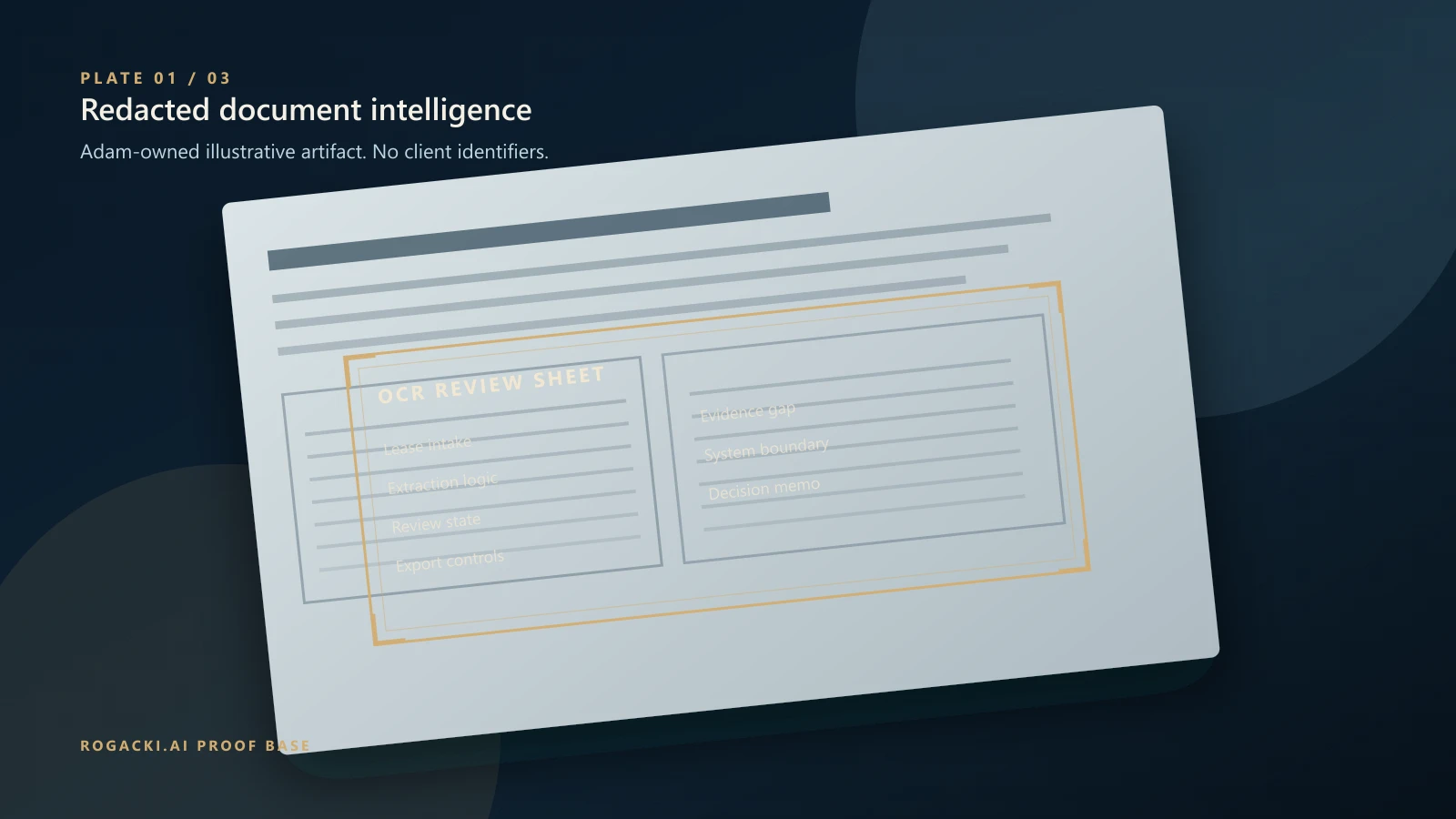
OCR Portal / CRE document intelligence
Lease intake, extraction paths, and review states for the working detail AI diligence actually needs.
Artifact
Redacted lease intake
Lens
Document intelligence
Question
What does the document workflow actually require?
02
Regulatory readiness
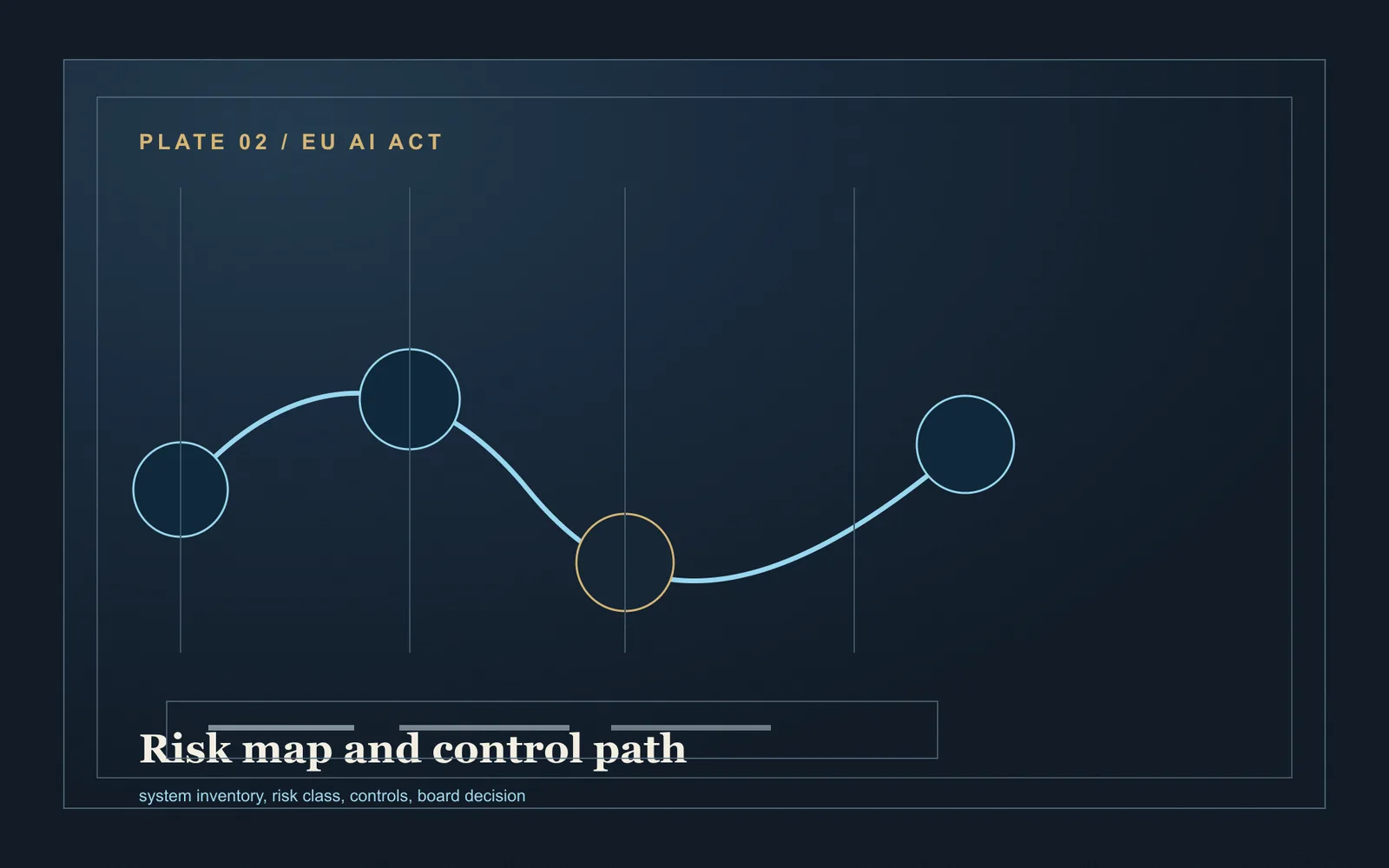
EU AI Act readiness
From AI ambition to system inventory, risk class, controls, and a decision a board can sign.
Artifact
Risk map and control path
Lens
Regulatory diligence
Question
Which controls belong before the board decision?
03
Build context
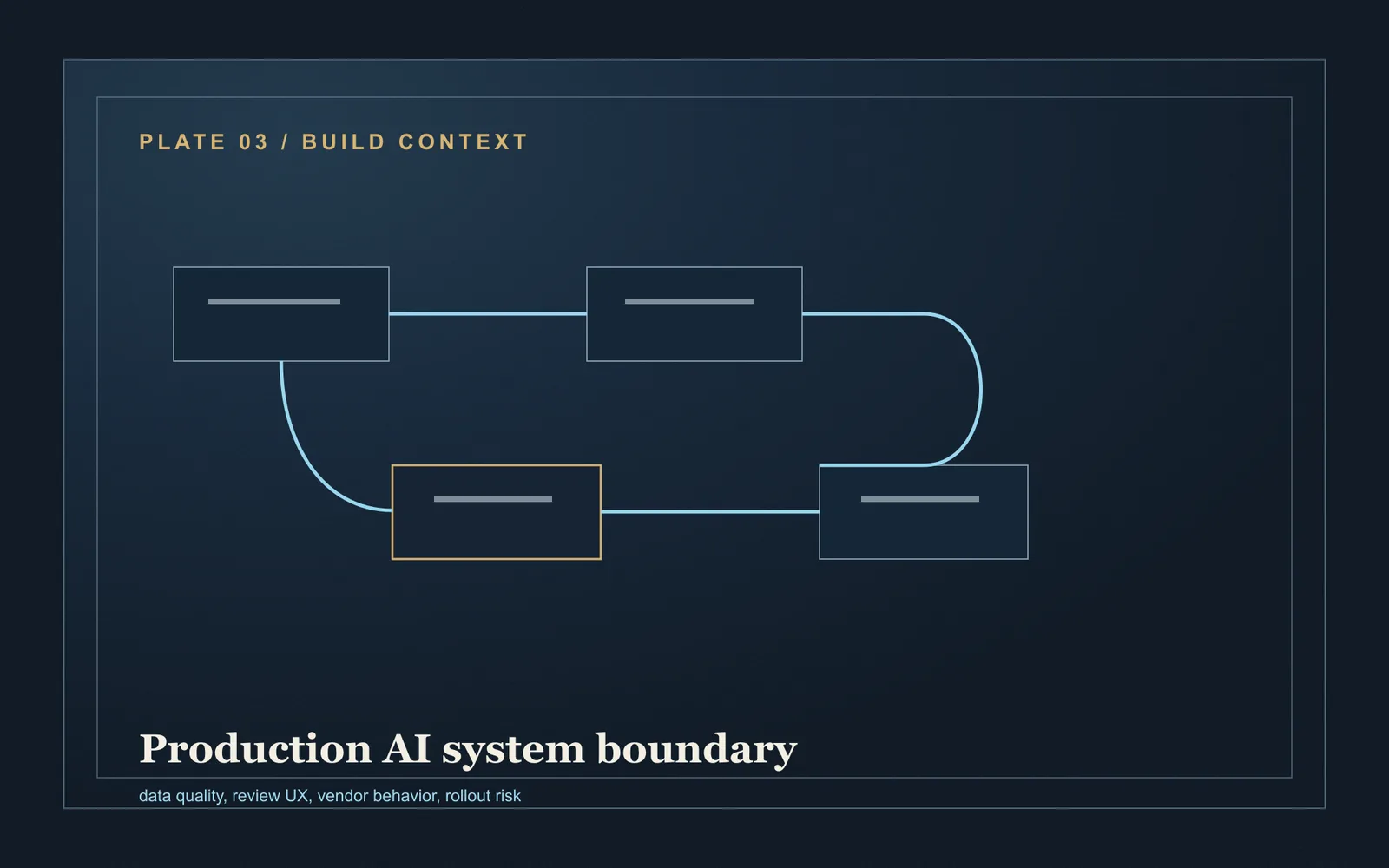
Production AI systems built
Data quality, review UX, vendor exposure, and rollout risk learned from systems that had to ship.
Artifact
Production workflow states
Lens
System build context
Question
What breaks when a prototype becomes software?
02 / Method
How the work runs.
The advisory process is built around one thing: turning an AI claim into a decision that can be read, challenged, and acted on.
01Intake
Decision first
We start with the decision, deadline, system boundary, and evidence already available.
02Review
Artifact read
Claims are checked against decks, workflows, vendor language, data exposure, and delivery reality.
03Map
Risk and value
The work turns ambiguity into a ranked map of upside, control gaps, dependencies, and cost.
04Memo
Board-readable output
The final output is a clear recommendation: build, buy, defer, kill, or govern differently.
05Handoff
Optional build path
If implementation makes sense, rogacki.ai can hand off to AROG AI without blending the advice.
03 / Advisory
Three ways in.
Fixed-scope enough to be useful, senior enough to affect decisions.
Commercial scope is quoted after intake, once the decision, urgency, and
evidence base are clear.
Gen-AI Diligence Sprint
Investors, boards, or leadership teams testing AI claims in software, services, CRE, or regulated workflow assets.
Output
A builder's read on AI claims, data flows, build risk, vendor exposure, and AI Act implications.
Timeline
2-3 weeks
Commercials
Quoted after intake
Best for
A live decision, investment question, vendor claim, or AI roadmap that needs pressure-testing.
Not for
Generic AI education, trend briefings, or exploratory workshops without a decision owner.
Inputs needed
Decks, system notes, vendor claims, data room excerpts, process maps, or interview notes.
First deliverable
A decision memo with risk map, evidence gaps, and build-buy-defer recommendation.
Portfolio AI Roadmap
European leadership teams who need a sequenced AI value-creation plan.
Output
Prioritized use cases, build-vs-buy calls, budget envelope, and board-ready action memo.
Timeline
6 weeks per company
Commercials
Quoted after intake
Best for
Companies that already feel AI pressure but need sequence, governance, and budget discipline.
Not for
Idea lists, innovation theater, or roadmaps detached from data, ownership, and delivery capacity.
Inputs needed
Workflow inventory, leadership priorities, vendor stack, constraints, and current AI initiatives.
First deliverable
A ranked initiative map with controls, dependencies, and a board-readable first wave.
Fractional CAIO
European companies running 1-3 high-stakes AI initiatives at once.
Output
Executive partnership across vendors, technical decisions, reporting, and regulated rollout risk.
Timeline
6-month minimum
Commercials
Retainer scope, quoted after intake
Best for
Leadership teams that need senior AI judgment across active delivery, vendor, and governance decisions.
Not for
Teams looking for a chatbot build, content automation, or a retained meeting cadence without ownership.
A 30-day control plan with decision cadence, risk register, and delivery triage.
04 / Output
A memo surface, not a sales deck.
The output is designed to make a decision easier to defend. It shows the claim, the system boundary, the data exposure, and the action path in one place.
Sample outputAdam-owned illustrative artifact. No client identifiers.
AI Claim Review Sheet
Claim
Vendor says the workflow can automate 70% of document review.
System boundary
Lease intake, OCR, extraction logic, human review, export state.
Which claim is real enough to underwrite, and which needs controls first?
Decision
Proceed to controlled pilot only after evidence gaps are closed.
05 / Fit
A narrow room by design.
The work is strongest when there is a real decision, real evidence, and a clear owner for the next move.
Good fit
A board, investor, or leadership decision is already in motion.
AI claims, vendors, data exposure, or regulation affect the decision.
There are artifacts to read: decks, workflows, contracts, product notes, or system evidence.
The desired output is a decision memo, roadmap, risk map, or implementation triage.
Not a fit
Generic AI inspiration sessions or content automation briefs.
Requests that need a demo before the decision is clear.
Projects with no access to context, evidence, or decision owner.
Public proof requests that would require inventing client evidence.
06 / Intake
Bring the decision, not a generic brief.
The first message should make the call sharper before it starts. Send the decision, timing, AI claim, and available artifacts. No sensitive files are needed at this stage.
03Which AI claim, vendor, workflow, or system is under review?
04What artifacts can be shared before the first call?
07 / Voice
Speak the first inquiry.
Adam's AI assistant can qualify the first inquiry before a call: decision, deadline, workflow, risk, and available evidence.
This is a real AI voice assistant for shaping the first inquiry. It does not pretend to be Adam, does not quote prices, and should not receive confidential documents.
Anonymous proof is better than borrowed credibility.
Every claim needs backing.
A public link, approved artifact, or direct Adam approval. Otherwise it does not ship.
09 / Pressure
Pressure points for decision-makers, not personas.
Investors
Diligence questions where AI claims, data exposure, vendor dependency, or
automation upside materially affect the investment thesis.
Leadership teams
European leadership teams and decision-makers need an AI strategy that survives
implementation reality, budget constraints, and EU regulatory exposure.
Boards
Boards under value-creation pressure need a sober read on what to
build, buy, defer, or kill.
10 / Studios
Advisory and implementation, kept separate.
Advisory stays independent. If AROG AI becomes the right implementation
path, that handoff is explicit and scoped after the advisory decision.
rogacki.ai
AI strategy, diligence, EU AI Act readiness, and builder judgment.
AROG AI
Implementation studio for production AI workflows that need to ship as software.